The Real Cost of Skipping Professional Fall Closing
Every fall, a small number of homeowners decide to skip professional pool closing to save a few hundred dollars, either closing the pool themselves or leaving it uncovered and unwinterized through the off season. Almost every one of those decisions gets revisited the following spring, usually with a repair bill that dwarfs whatever the closing service would have cost. Here is what actually happens to an improperly closed pool over a Pennsylvania winter, and why the risk rarely matches the savings.
What Professional Fall Closing Actually Prevents
A proper closing shuts down and drains the equipment, removes ladders and handrails, removes return fittings and eyeballs and replaces them with winterizing plugs and gizmos, and blows all plumbing lines clear with an air blower before adding winterization chemicals and antifreeze where necessary. Every one of those steps exists to prevent a specific, predictable failure that shows up once temperatures drop below freezing.
Freeze Damage Isn’t Hypothetical, It’s Physics
What Happens Inside an Unwinterized Pipe
Water expands by roughly nine percent as it freezes. Plumbing lines that are not blown clear and plugged with air trap standing water inside PVC pipe and fittings. When that trapped water freezes and expands, it doesn’t have anywhere to go, so it splits the pipe or cracks the fitting from the inside. That damage is completely invisible until the pool reopens in spring and the equipment is turned back on, at which point water sprays from a cracked line that was perfectly intact all winter.
Why This Damage Is So Expensive to Repair
Because the failure happens underground or inside equipment lines that are buried or hidden behind the equipment pad, repairing a freeze cracked line often means excavation work to access the damaged section, not just a simple parts swap. What would have been a routine winterization step becomes a multi day repair project before the pool can even be reopened for the season.
The Water Level Mistake That Compounds the Problem
Water level matters just as much as the plumbing. If the water level sits too high relative to the tile line going into winter, freezing water can push directly against the tile and coping, cracking or popping tile loose and damaging coping stones. This is exactly why our Extended Maintenance Winter Watch service exists, monitoring and adjusting water level throughout the off season rather than leaving it wherever it happened to sit after the initial closing.
Covers and Anchors Matter More Than Homeowners Expect
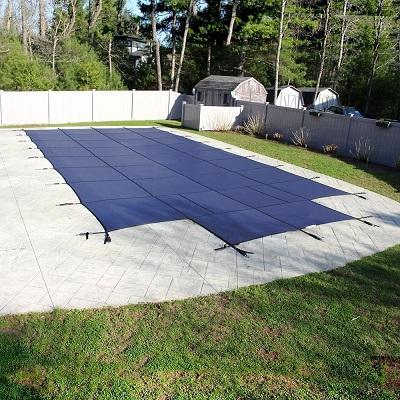
A properly installed safety cover, secured with intact anchors, straps, and springs, keeps debris out of the water and protects against the added weight and stress of snow and ice sitting directly on the pool. A cover with stripped anchors or missing hardware can’t be properly secured, which defeats much of its purpose for the season.
What a DIY Closing Usually Misses
Homeowners closing their own pool often skip or improperly execute the plumbing blowout step specifically, either because they don’t have access to the right equipment or because they don’t fully clear every line, including less obvious ones like the heater or a separate spa line. A line that is ninety percent clear can still trap enough water to crack under freeze pressure.
The Math Rarely Works Out
A professional fall closing is a fixed, predictable cost. A single cracked plumbing line, a chipped tile line from high water, or a damaged skimmer from freeze pressure routinely costs several times more to repair than closing would have cost in the first place, before even factoring in the lost time waiting for repairs before your pool can reopen.
Protect Your Investment This Fall
Arista Pool & Spa provides thorough, professional fall closing service built around preventing exactly these failures, along with free estimates so you know the cost upfront before committing. Contact us today to schedule your fall closing, or visit our state-of-the-art showroom to talk through your specific pool and equipment setup before the first freeze arrives.